What Is Kiln Drying?
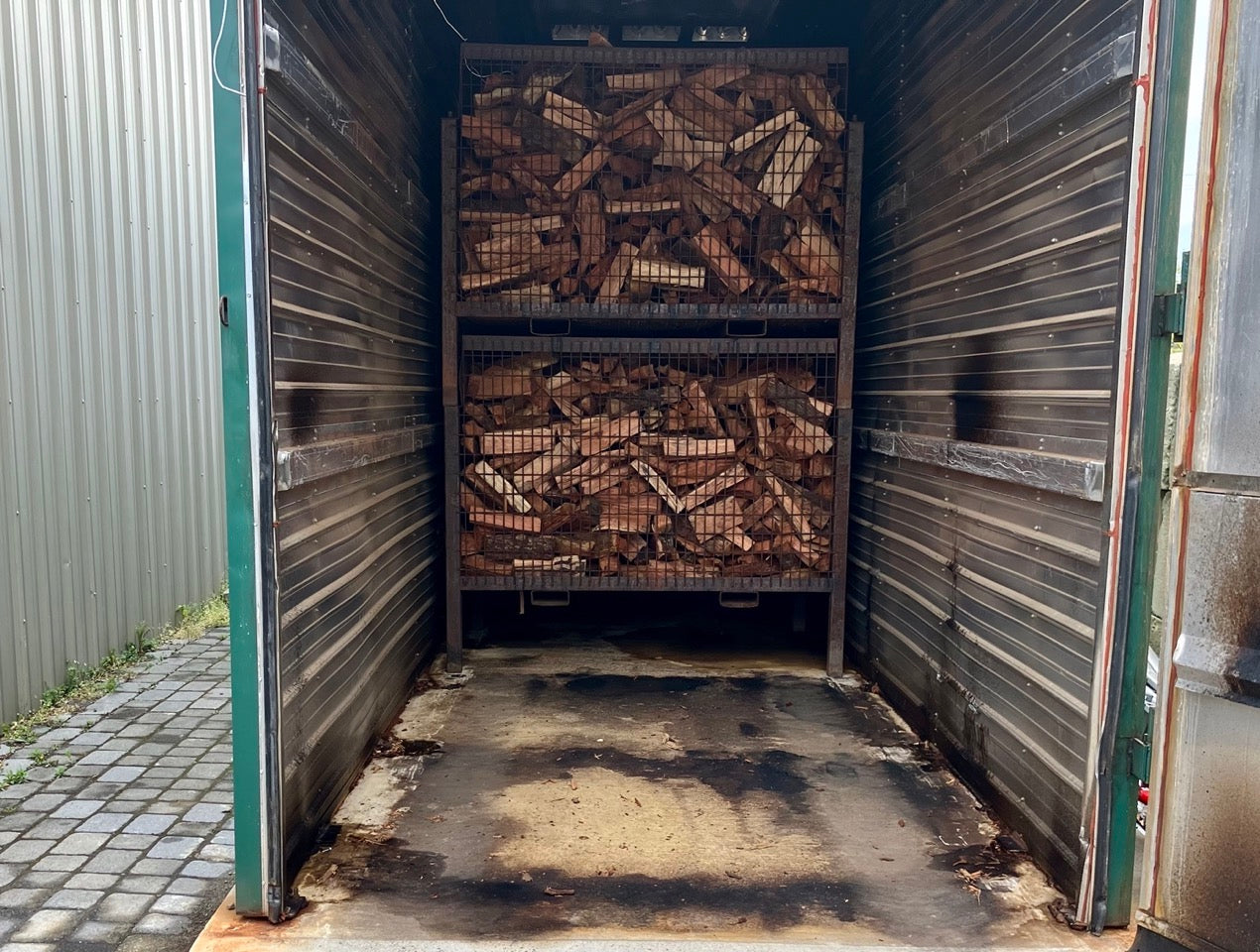
Kiln drying is a controlled method of reducing the moisture contained within wood. Firewood is placed inside a specialized kiln where conditions such as temperature and humidity can be regulated while moisture is removed.
Traditional seasoned firewood relies primarily on time, weather, airflow, and outdoor storage to dry. A kiln creates a controlled environment that allows the drying process to be monitored more closely and completed with greater consistency.
For firewood, that consistency matters. Excess moisture can make wood harder to ignite, create additional smoke, and reduce the amount of useful heat produced by the fire.
How Wild Logs Kiln-Dries Firewood
Our process is designed around control, consistency, and quality from the time the firewood is prepared until it’s ready for use.
The process begins by preparing the firewood for drying. Properly processed pieces allow heat and airflow to work more effectively throughout the kiln load.
The prepared firewood enters our specialized kiln chambers, where temperature and humidity are carefully controlled throughout the drying cycle.
Unlike outdoor seasoning, kiln drying isn't dependent entirely on changing weather conditions. Creating a controlled environment allows us to manage the drying process more consistently.
Moisture content is an important indicator of whether firewood is ready to burn. During processing, our team monitors the wood and performs quality checks to help ensure it meets our standards before moving forward.
Once the drying and treatment process is complete, the firewood is prepared for its final use, whether it's being packaged for convenient use or prepared for bulk firewood delivery.
Why Does Firewood Moisture Content Matter?
Firewood burns most effectively when it isn’t carrying excessive moisture.
When wet wood is placed on a fire, energy that could be producing heat must first help evaporate the water inside the wood. This can make the fire more difficult to establish, reduce combustion efficiency, and contribute to additional smoke.
Proper drying removes much of that excess moisture before the wood reaches your fireplace, stove, or fire pit. That’s why moisture content is one of the most useful ways to evaluate whether firewood is truly ready to burn.
Kiln drying also provides greater control over moisture reduction than simply assuming wood is dry because it has been stored outdoors for a certain amount of time.
Kiln-Dried vs. Seasoned vs. Green Firewood
Understanding how firewood has been dried can help you choose better-quality wood.
Seasoned firewood isn’t automatically poor-quality firewood. The key difference is control and consistency. Kiln drying gives us the ability to manage the drying environment rather than relying exclusively on outdoor conditions.
For an even closer look at the differences, read our complete kiln-dried vs. seasoned firewood guide.
Why Wild Logs Uses a Certified Kiln Process
Wild Logs operates a USDA-certified kiln facility and follows a controlled heat-treatment process designed to prepare firewood to a high standard.
Our process goes beyond simply leaving split wood to dry. By controlling conditions inside the kiln, monitoring moisture, and performing quality checks, we can provide customers with firewood that delivers more predictable performance.
That commitment applies whether you’re purchasing wood for a fireplace, wood stove, backyard fire pit, or ordering larger quantities through our bulk firewood delivery service.

Experience the Difference Properly Dried Firewood Makes
From easier ignition to more consistent heat, properly dried wood can change the quality of your fire. Our kiln-drying process is designed to give you dependable firewood without waiting months for wood to season at home.
Explore Wild Logs kiln-dried firewood and find the right hardwood for your next fire.
Have questions about our firewood, kiln-drying process, or ordering options? Contact Wild Logs and our team can help.
Frequently Asked Questions About Kiln Drying Firewood
Kiln-dried firewood is firewood that has been dried inside a controlled kiln rather than relying entirely on outdoor air drying. Temperature, humidity, and moisture can be monitored during the process to create more consistent, ready-to-burn wood.
Firewood is generally considered ready to burn when its moisture content is around 20% or lower. Excessively wet wood can be harder to ignite, produce more smoke, and use more of the fire’s energy evaporating water instead of producing useful heat.
Kiln drying offers more control and consistency. Properly seasoned firewood can burn effectively, but outdoor drying is influenced by weather, humidity, storage, stacking, and seasoning time. Kiln drying allows those conditions to be controlled and moisture reduction to be monitored.
Kiln-drying time can vary based on wood species, starting moisture content, log dimensions, kiln conditions, and the desired final moisture level. Rather than relying only on a fixed amount of time, moisture monitoring helps determine when the wood has been sufficiently dried.
Properly kiln-dried wood generally burns more efficiently and with less unnecessary smoke than wet or green firewood because the fire doesn’t have to overcome as much excess moisture. Actual fire performance also depends on the wood species, appliance, airflow, and how the fire is built.